Plan appropriate child restraints for Orlando road travel before selecting a vehicle. Florida’s child-restraint statute covers children aged five and younger and includes a hired-chauffeur provision that leaves responsibility with the parent or guardian. Legal wording does not determine the best seat for every child: follow manufacturer size limits and installation instructions. Suits Black Car offers complimentary seats within published transfer-category allowances, subject to equipment and configuration confirmation; this is not a standalone rental service.
What does Florida law say about child restraints?
Florida’s official statute, section 316.613, requires an approved child restraint for children five and younger. It specifies a separate carrier or integrated seat through age three; ages four and five may use those options or a booster. Read the current statutory text for its full scope and exceptions rather than relying on a shortened social-media summary.
Subsection six addresses hired chauffeur-driven vehicles and expressly places child-restraint responsibility with the parent, guardian or person responsible for the child’s welfare. It should not be interpreted as an instruction to transport a young child without an appropriate restraint. The practical task remains to arrange suitable equipment for the actual journey.
The legal age categories are not a complete seat-selection guide. A child’s height and weight, the seat’s specifications and the vehicle installation matter. If unsure which restraint fits, seek guidance from a qualified child-passenger-safety resource before travel. A booking form’s age field cannot resolve every legal or safety question.
Use manufacturer limits to choose the seat
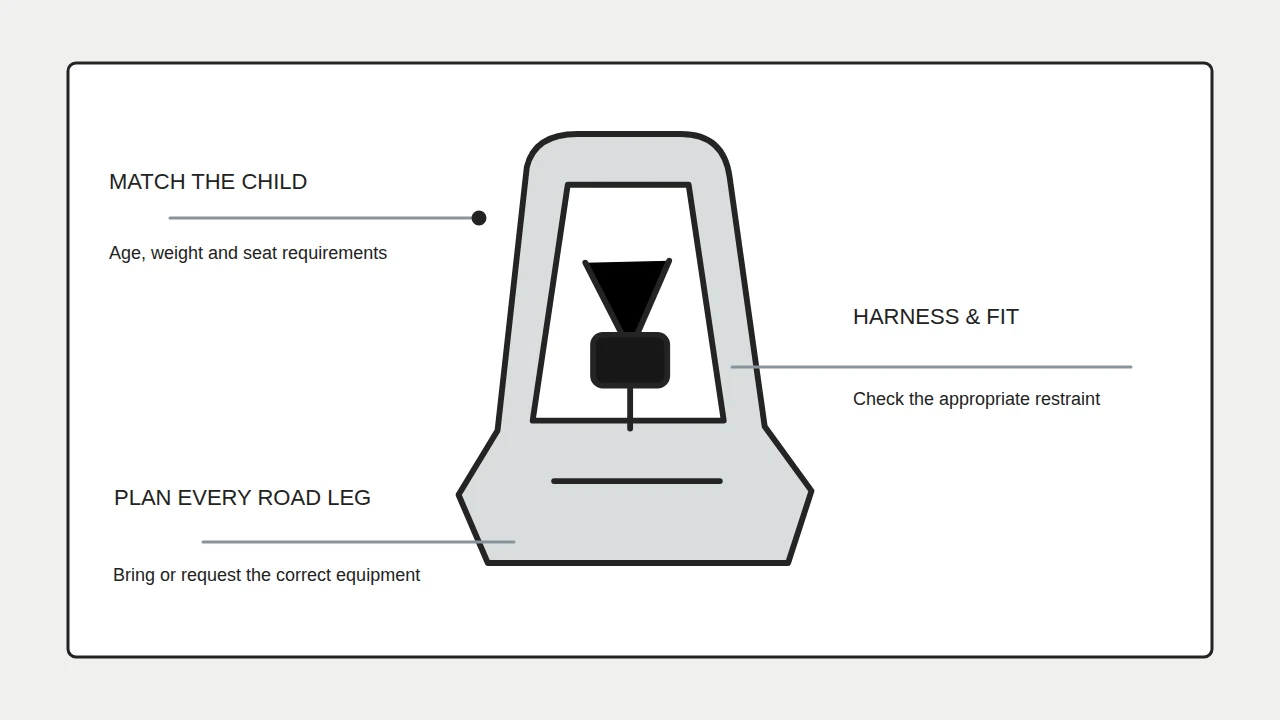
NHTSA’s seat guidance recommends matching the restraint to the child and vehicle, following manufacturer height and weight limits and installation instructions. It describes progression from rear-facing seats to forward-facing harnesses and then boosters when appropriate. A birthday alone is not enough information to settle every choice.
When requesting equipment, give the child’s age and relevant size information, plus the type needed. Explain a rear-facing requirement explicitly instead of assuming a provider will infer it from an age category. If a seat has specific installation requirements, discuss those before the ride is confirmed.
Do not choose a booster only because a form lists it or a friend’s older child uses one. The seat should suit your own child’s development and size. Likewise, a seat that fits one family car may need a different installation arrangement elsewhere. Decide the requirement first, then check that the planned vehicle and equipment can meet it.
How do Suits child seats work with a transfer?
Child seats are complimentary on request within the selected category’s published allowances, subject to equipment and configuration confirmation. List each child, the needed seat type and size information in your request. A published allowance is a planning limit, not a promise of every model or configuration on every date.
Towncar allowance is one child seat or booster in total. Minivan allowance is up to one child seat and one booster, two in total. SUV and the larger van categories list up to two child seats and two boosters, four in total. These limits are separate from passenger and luggage counts; a larger van does not supply unlimited restraints.
Use the Orlando car service with child seats page alongside the vehicle capacity guide. If your requirement falls outside a category’s allowance, request another suitable arrangement for review. Do not reduce the seat count or select a different restraint merely to produce a fare in the form.
Bringing your own equipment: what to consider
Bringing a familiar restraint can give you control over the exact equipment, but it adds handling and installation tasks. Check your airline’s rules for carrying or using it, protect it appropriately during air travel and keep the manufacturer instructions accessible. Airline cabin use and installation in a ground vehicle are separate questions.
Tell the transfer provider that you are bringing your own seat. Explain whether it will be used during the ride or carried as luggage, and include any installation requirements. Count the child as a passenger either way. If the seat needs space as an extra item, add it to the inventory alongside suitcases and the folded stroller.
Allow time to manage the equipment at pickup without rushing the installation. Keep essential straps or components together and inspect the seat according to its instructions after travel. Avoid relying on an unfamiliar borrowed item whose history, suitability or installation you cannot establish. Your plan should be based on equipment that can be checked and used correctly.
What should you check with a standalone rental provider?
A standalone seat rental is a separate arrangement from a transfer that supplies seats for its own vehicle. If considering a rental company, check the exact product, size limits, delivery and collection process, instructions and what happens if the accommodation or schedule changes. Do not assume a generic “child seat” description identifies the equipment your child needs.
Ask where you will receive it before the first road journey. Delivery to a hotel may not solve the airport-to-hotel trip if you need the seat before reaching that property. Likewise, collection before the final ride can leave a gap. Write the equipment handover into the same itinerary as the transport legs.
Suits does not publish a standalone car-seat-rental product on this website. Its complimentary requested seats are part of a reviewed transfer configuration. The seat rental planning page explains this distinction. Choose the equipment arrangement that covers the entire journey, rather than only the days at the accommodation.
Compare private car, app ride, shuttle and rental car carefully
Different vehicle services can have different equipment and operating arrangements. Ask the intended provider exactly what it supplies, what you must bring and how the seat is confirmed. Do not assume that an app category, shuttle ticket or rental-car reservation automatically includes an appropriate restraint for every child.
For a private request, specify the equipment before confirmation. For an app ride, check the actual available service and its current rules. For a shared product, confirm the vehicle and child-travel requirements directly with that operator. For a rental car, review both the car and seat booking and how the equipment is collected and installed.
The useful comparison is whether the whole family can travel appropriately from the first airport journey through the final return. A cheaper transport offer that leaves seat arrangements unresolved is not a complete plan. Ask the questions before paying, and keep the confirmed equipment details with your travel documents.
Include strollers, bags and changes of vehicle
A child seat occupies a seating position; a folded stroller needs luggage room. These are separate constraints. List both with every suitcase and bulky item, then compare the published vehicle limits. A small group with several restraints and a double stroller may need a larger category than its passenger count suggests.
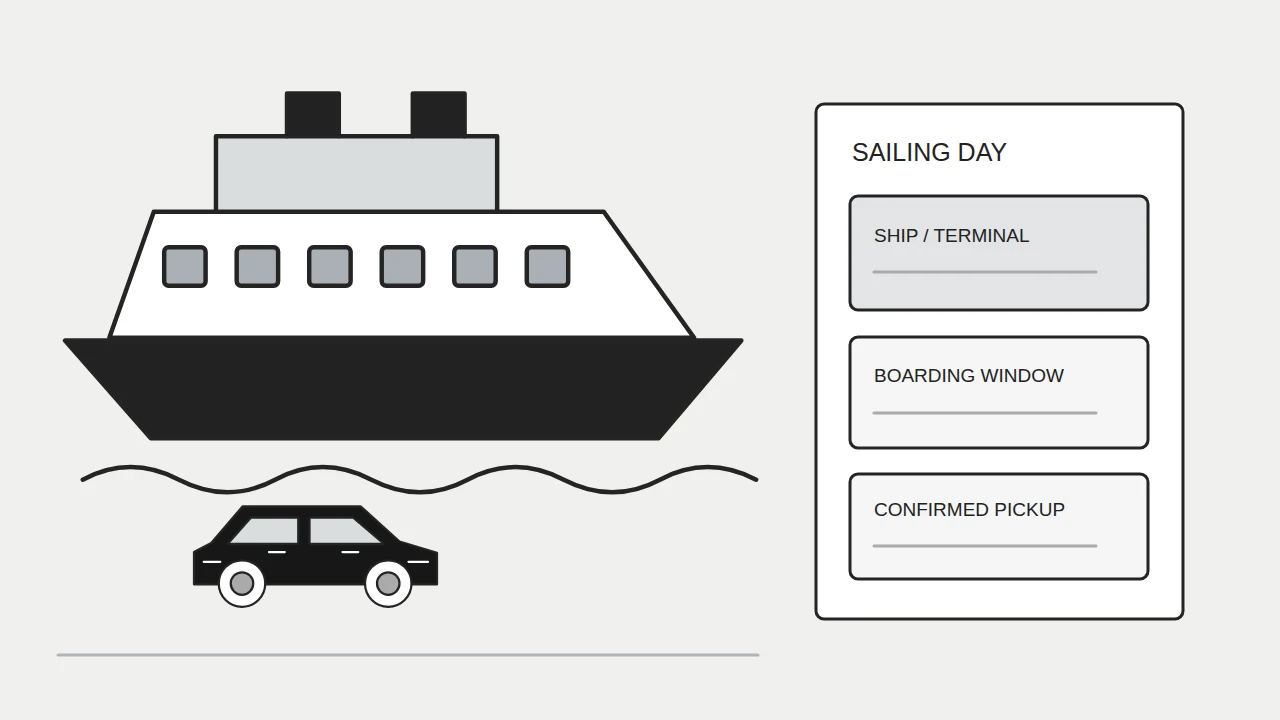
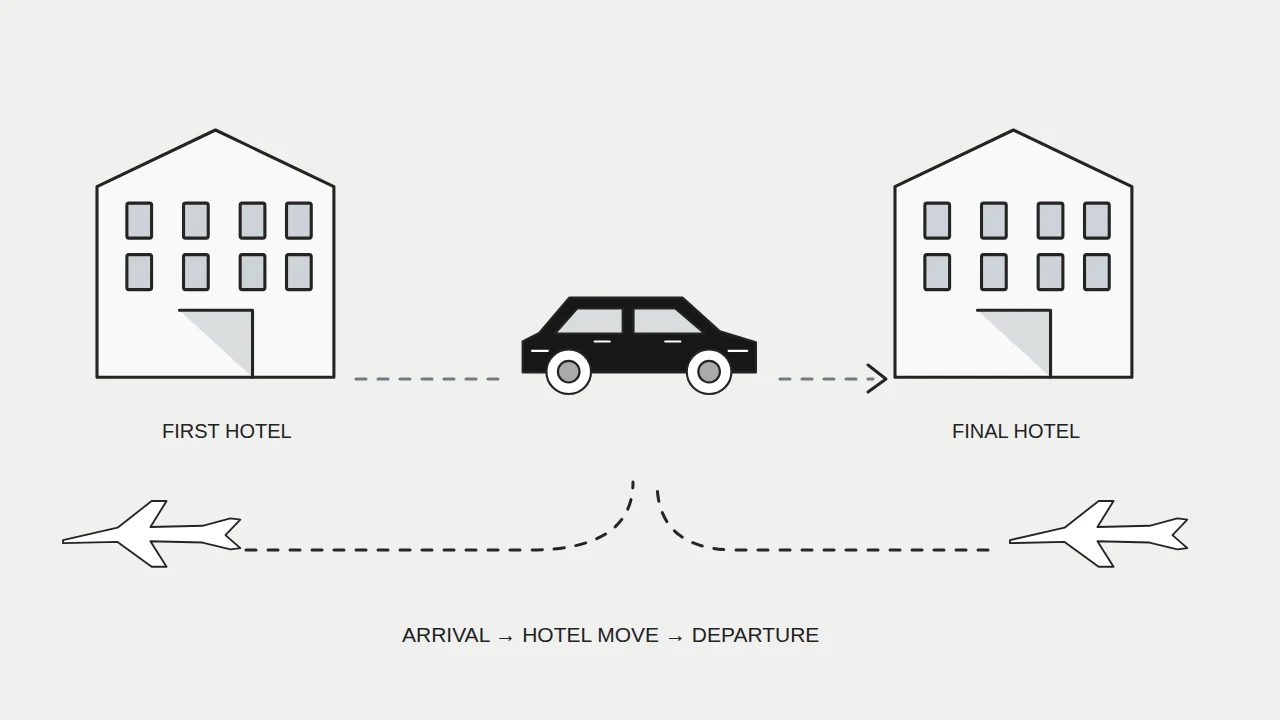
If the family changes hotels or takes a cruise, check the equipment arrangement for each leg. A seat requested for one provider’s vehicle does not automatically follow you into another journey. Keep a written list showing which transport arrangement covers the airport arrival, hotel move, port transfer and return.
Children and luggage can change between requests and travel. Review the size information and the final inventory before departure, particularly after a growth change or additional traveler. Ask the team to confirm any revised configuration. At pickup, keep the equipment and essential items accessible so handling the bags does not distract from checking the seat arrangement.
Build a complete family road-travel plan
Start with the child’s appropriate restraint requirements. Then select transport methods that can meet them and check passenger and luggage capacity. Record the equipment source for every road leg, including how it is received and returned. Confirm details before travel rather than assuming a general family-friendly description supplies what you need.
For airport transport, the MCO transfer service provides the route planning basics. Once the itinerary and equipment inventory are accurate, submit your family transfer request. Include the local dates, exact hotel addresses and any changes of accommodation or separate cruise journey.
When card checkout is available, payment creates a paid request that still needs separate ride confirmation. If Suits cannot provide the ride, the team will issue a full refund of the amount paid. Keep the confirmation and equipment details together, and read the reservation policies before treating the arrangement as settled. Review official safety guidance whenever you need to resolve a seat-selection question.
Frequently asked questions
Does the hired-chauffeur provision mean a child needs no seat?
No. Florida’s statute specifically leaves child-restraint responsibility with the parent, guardian or responsible adult in that provision. Plan an appropriate restraint for the actual child and journey. Manufacturer size limits and installation instructions matter as well as legal age categories. Read the current official statute and safety guidance before resolving an uncertain requirement.
Can I rent a standalone child seat from Suits Black Car?
The website does not offer a standalone seat-rental product. Suits offers complimentary seats requested as part of a transfer, within the selected category’s published allowances and subject to configuration confirmation. For a separate rental, check another provider’s equipment, delivery and collection details, ensuring the seat is available before your first road journey.
What child information should I include with a seat request?
Include each child’s age, relevant height or weight, required restraint type and any specific installation needs. Explain if you are bringing your own equipment. These details help the configuration review but do not replace the seat manufacturer’s instructions. Count every child as a passenger and list strollers separately as luggage items.
Can all four children use restraints in a towncar?
The published towncar allowance is one child seat or booster in total, so it does not cover four requested restraints. Compare the larger categories and specify the correct seat types for review. Passenger capacity and child-seat capacity are separate limits. A larger vehicle still needs the equipment configuration to be confirmed.