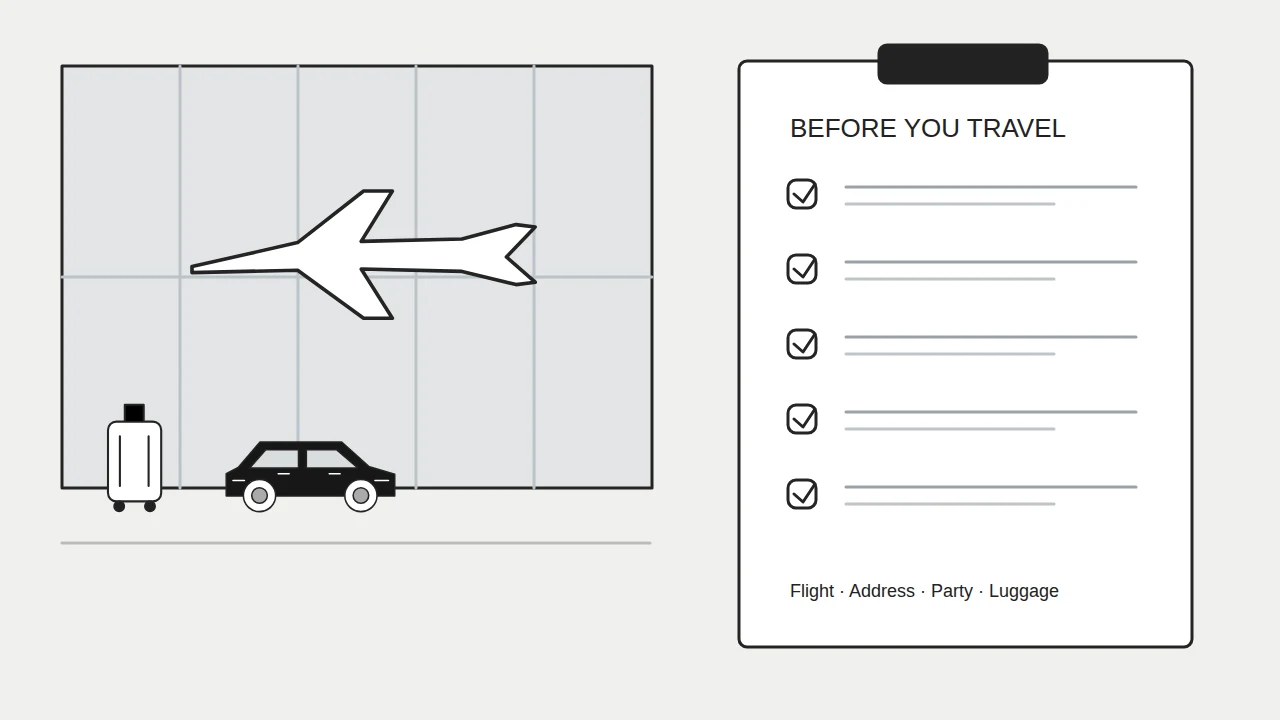
An Orlando airport transfer is easier to organize when six details match your actual trip: airport, local arrival date, destination, vehicle load, child seats and the return journey. Check those details against your flight and hotel confirmations before requesting a ride. A fare estimate describes the selected itinerary; the team’s separate confirmation establishes the arrangement you can rely on. This checklist helps you prepare both.
1. Start with the airport code, not the city name
Open the flight confirmation and find the three-letter arrival code. MCO means Orlando International Airport. SFB means Orlando Sanford International Airport. Both serve visitors traveling around Central Florida, but they are different pickup locations with different rates. A search result or airline description that says “Orlando” is not enough to choose the right airport in a transfer form.
Repeat this check for the return flight. An itinerary can arrive at one airport and depart from the other, particularly after an airline change. If that happens, describe the two legs separately. Do not select a same-route round trip merely because both tickets mention Orlando. Keep a copy of the itinerary showing airport codes and flight numbers where everyone coordinating the journey can find it.
For MCO travel, use the Orlando International Airport transfer page. For SFB, start with the Sanford Airport service. These pages help keep the route selection consistent with the ticket before you compare any vehicle fares.
2. Check the local arrival date and flight details
Read the arrival date in the destination’s local time. The day your aircraft leaves home may not be the day it reaches Orlando. This matters for a late connection, an overnight flight or an international journey. If your itinerary shows arrival at 12:30 a.m. on Tuesday, enter Tuesday rather than the Monday evening departure date.
Include airline and flight number where available. They are useful identifying details, even when a form allows you to continue without them. Add information about a connecting flight if it explains a change in date or airport. The scheduled landing time is a reference for planning; it is not a guarantee that your group will have bags and be ready to leave at that minute.
After an airline change, review all related fields together. A new flight number may also bring a different terminal, local date or destination airport. Send the revised details and wait for your pickup arrangement to be reconfirmed. Keep the latest confirmed instructions rather than relying on an old screenshot from the original booking.
3. Use a complete address for the destination
Write the hotel’s full name and street address. “Disney,” “Universal” and “International Drive” identify broad areas, not one entrance. Similar resort names, separate towers and properties across a large hotel zone can create ambiguity. Copy the address from your accommodation confirmation, then check that it matches the property where you are staying on arrival night.
If you are staying in a vacation home, include the full property address and any access instructions that are appropriate to share. A management company’s office may be different from your accommodation. If you need to collect keys elsewhere, describe that stop explicitly. Additional stops or changed endpoints need review rather than being assumed part of a published airport-to-hotel fare.
A direct park visit is also a different destination from a hotel transfer. For example, a Universal-area hotel fare should not be treated as a confirmed fare to the Epic Universe gate. Choose the route that describes the actual journey, and request a quote when the named endpoint does not have a published rate.
4. Count people, bags and bulky items independently
Count every passenger, including infants who will need a child restraint. Then count large suitcases, carry-on bags, folded strollers and any bulky items. These are separate constraints. A vehicle that has enough passenger seats might not have enough usable luggage room for a cruise group with a suitcase and carry-on for each person.
Use the published category limits as a starting point, then describe the configuration. The towncar lists up to four passengers and three suitcases; the minivan lists five and five; the SUV lists six and six. Larger vans have different allowances. Shape matters as well as count, so mention oversized cases, a double stroller or equipment that does not fold compactly.
The vehicle capacity guide includes passenger, suitcase and child-seat allowances together. Avoid selecting a category just because one number fits. If a party is close to a limit, list the complete load and ask for review before confirmation. A clear description gives the team a chance to assess the practical fit.
5. Request the child-seat configuration before travel
Write down each child’s age, height or weight and the type of restraint needed. Child seats are complimentary on request within the selected vehicle category’s published allowances, subject to equipment and configuration confirmation. The towncar allowance is one child seat or booster in total; several young children can therefore require another category even when the passenger count is small.
The seat must suit the child and the vehicle, not just fit a broad age label. NHTSA’s child-seat guidance recommends following the seat manufacturer’s height and weight limits and installation instructions. If bringing your own seat, tell the team and include it in the luggage and seating plan.
Treat a stroller and a child restraint as different items. A stroller will need luggage space when folded, while a restraint occupies a passenger position. Check both arrival and return legs, particularly if luggage or the number of passengers changes during the vacation. Confirm the equipment arrangement before travel rather than waiting until the airport curb.
6. Plan the return from the final hotel
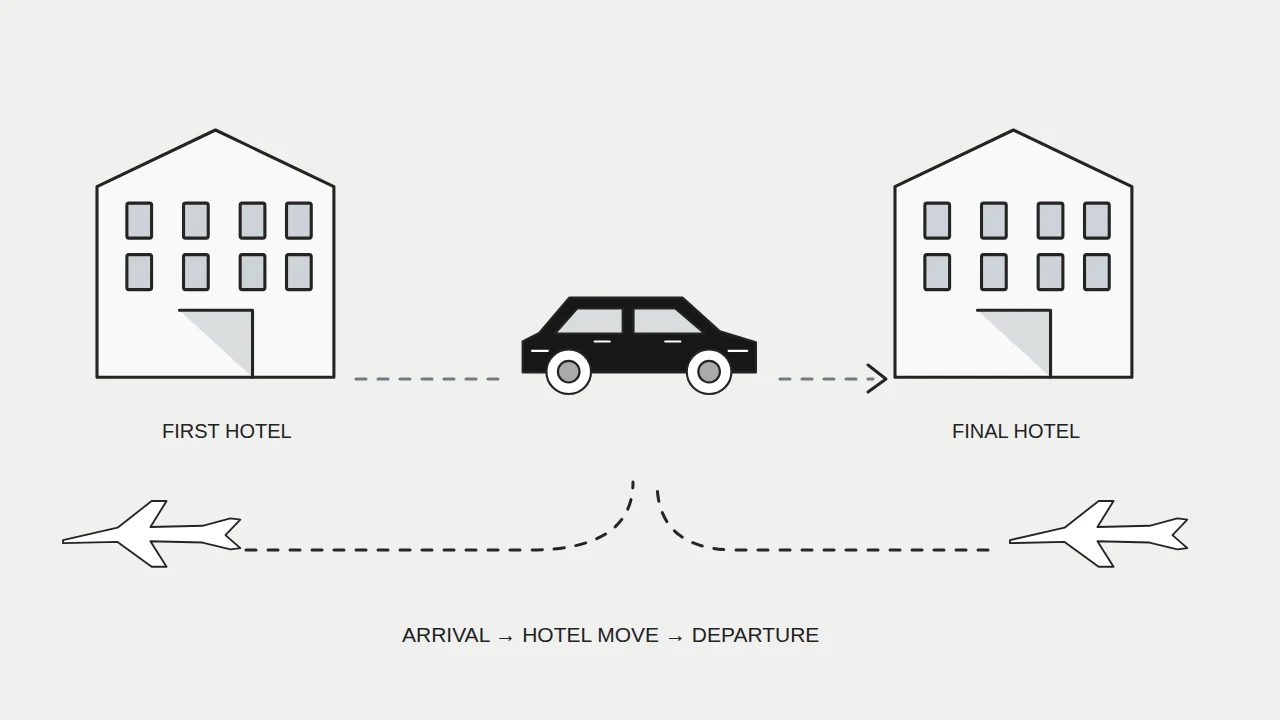
Enter the departure flight and the hotel where you will be staying on the final night. A split stay can change that address even though the arrival flight is unchanged. Review the return date independently and make sure an early-morning flight does not result in a pickup entered on the wrong day.
Work back from your airport requirements. MCO’s official check-in guidance recommends reaching the security checkpoint two hours before departure. You need additional time before that for the drive, unloading, airline check-in and bags as applicable. Follow the airline’s own guidance when it requires more time for your flight.
Allow room for packing and checking out at the hotel. Keep departure essentials accessible instead of placing passports, medication or flight information at the bottom of a suitcase. A confirmed pickup is easier to use when your entire party is ready with luggage at the agreed location. Recheck the return instructions after any hotel change.
Compare the total and keep the confirmation
The published transfer rates are vehicle base fares for the selected route. Tolls and taxes are included. Pickups from 10 p.m. to before 6 a.m. add $20 for each applicable leg, while gratuity is optional. Compare the full itinerary, including overnight legs, instead of multiplying a one-way fare and assuming that is the round-trip price.
Online card payments are not available yet. Ride requests are saved for our team to review, and custom or hourly rides receive a quote first. Your ride requires our team’s confirmation.
When payment is available, a successful transaction records a paid request; a ride still requires separate availability confirmation. If Suits Black Car cannot provide the ride, the team will issue a full refund of the amount paid. Save the request reference and status link, then keep the eventual confirmation with your travel documents.Before submitting, read the dates, addresses and passenger details aloud to the person traveling with you. This quick cross-check often catches a return hotel or date copied from the arrival leg. Once the information is accurate, submit the airport transfer itinerary for review.
Create a one-page transfer worksheet
Use six labeled lines for the details in this checklist, then add a second column for the return. Put the airport code and date at the top of each column so the different legs remain visible. Below the destination, list the actual people, bags and requested seats rather than a general phrase such as “family luggage.” Finish with a space for the request reference and eventual ride confirmation.
Keep the worksheet with the flight and hotel confirmations. If someone else books on your behalf, send them that same version and ask them to compare the submitted request against it. After a change, update the affected column and record whether the revised arrangement has been confirmed. This is a personal planning tool, not a substitute for the provider’s confirmation.
Before leaving home, check that the traveler coordinating pickup can access the latest version. A useful worksheet describes the current trip; several conflicting copies can be less helpful than one concise, accurate set of details.
Frequently asked questions
Should I enter flight landing time or the time I expect to leave baggage claim?
Provide the flight’s scheduled arrival details and describe any relevant pickup requirements in your notes. Landing and being ready with bags are different events, so follow the arrangement in your confirmed instructions. Do not invent a baggage-collection duration to make the form fit. The team can review your complete itinerary before confirmation.
What should I check after changing an Orlando flight?
Recheck the airport code, flight number, local arrival date and time, then share the revision with the team. A flight change can affect more than one field, including the overnight fee window. Wait for revised pickup instructions to be confirmed rather than assuming your original arrangement automatically covers the new itinerary.
Does a round-trip fare cover a hotel change?
A hotel change must be stated in the itinerary, especially if the final property uses a different route zone. List the arrival hotel and return hotel separately so both legs can be reviewed. An additional hotel-to-hotel ride is a separate request; it should not be assumed included in the airport round-trip fare.
What can I do if my luggage might exceed the category limit?
Choose a larger suitable category or explain the full load for review before confirmation. Include folded strollers, unusually bulky bags and mobility equipment rather than counting only standard suitcases. The passenger allowance and luggage allowance are separate limits. Use the fleet guide to compare both together.