Choose an Orlando transfer vehicle by checking passengers, luggage and child restraints together. Suits Black Car publishes category limits to help you narrow the choice, but the requested configuration and availability still need confirmation. A family of four does not automatically fit a towncar if it needs several seats or unusually bulky luggage. This guide shows how to compare the complete load before requesting an airport ride.
Start with the three limits that affect a family trip
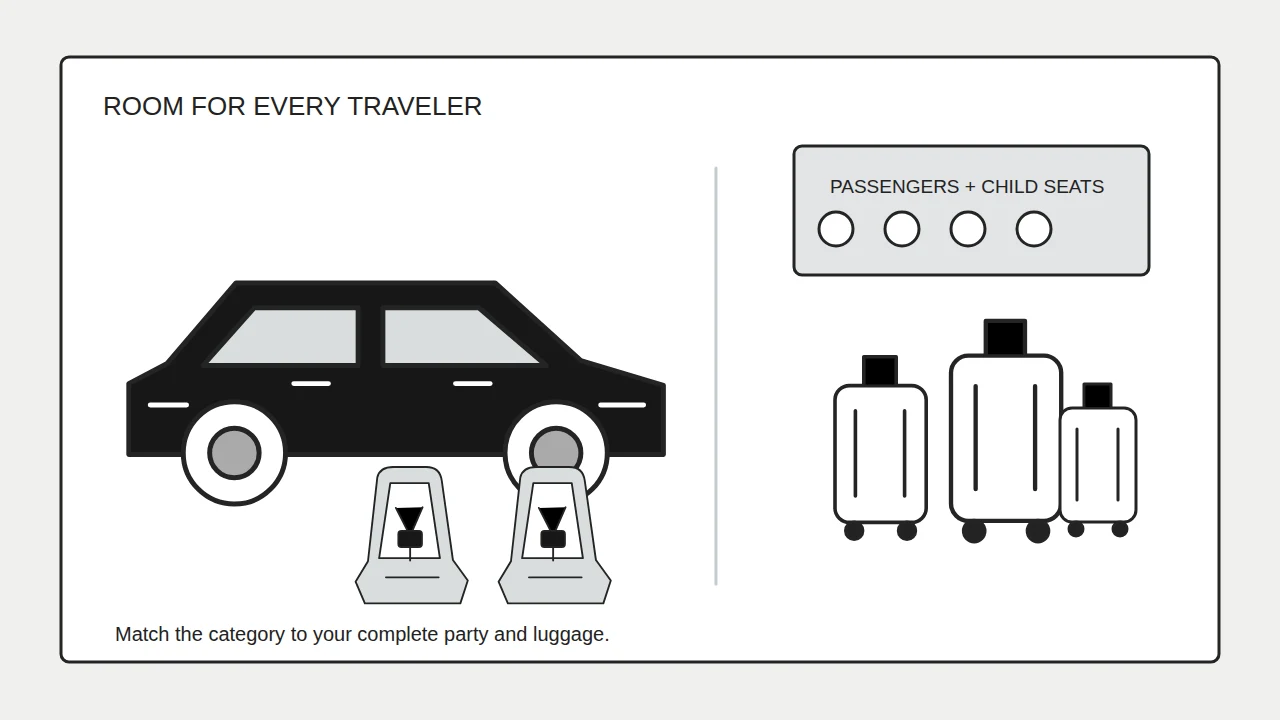
Passenger capacity tells you how many travelers a category can carry. Suitcase capacity describes the published luggage allowance. Child-seat capacity limits the requested combination of restraints and boosters. All three need to work for the same journey. Infants count as passengers; a stroller does not count as a passenger but still needs space after folding.
Make a simple inventory before looking at prices: adults, children, suitcases, smaller bags, strollers and equipment. For each child, list the required seat type and size information. Then compare that inventory with the category table rather than selecting the cheapest fare first and trying to fit the group afterward.
Availability and the precise configuration are reviewed separately. The website’s categories describe capacity planning, rather than promising a particular make, model or vehicle on every date. Explain a wheelchair, large musical instrument, oversized stroller or other unusual item before confirmation so the practical load can be considered. Standard suitcase counts cannot describe every possible shape.
What does each vehicle category allow?
The authoritative vehicle category guide lists five choices: towncar, minivan, SUV, ten-passenger van and fourteen-passenger van. Towncar capacity is four passengers and three suitcases, with one child seat or booster in total. Minivan capacity is five passengers and five suitcases, with up to one child seat and one booster, two restraints in total.
SUV capacity is six passengers and six suitcases. The ten-passenger van lists ten passengers and eleven suitcases; the fourteen-passenger van lists fourteen and fourteen. Each of these larger categories lists up to two child seats and two boosters, with a total of four restraints. A fourteen-passenger allowance does not create fourteen child-seat positions.
These are category ceilings, not a guarantee that every configuration at every ceiling fits simultaneously. A party with bulky equipment or several child restraints should give the complete arrangement for review. When bringing your own seat, explain that too, including whether it needs installation or is traveling as luggage. Seats, bags and passengers should be considered together.
When is a towncar a reasonable starting choice?
A couple with two standard suitcases and small personal bags has a different load from two adults, two children, a large stroller and four cases. Both parties might be under the passenger limit, but only one is comfortably within the published suitcase allowance. The child-seat requirement can create another constraint even before luggage is considered.
For the published MCO-to-Disney resort and MCO-to-Universal hotel zones, the towncar base fare is $105 one way or $195 round trip. These are vehicle prices, not per-person tickets. Tolls and taxes are included; overnight charges and optional gratuity are separate. Check the directional route table for your actual address and category.
Use the towncar as a starting choice when your complete inventory fits its limits and the team can confirm the configuration. Do not describe a booster as luggage when it needs to be used during the ride, or leave a suitcase out to make the form accept the selection. An accurate request is more useful than a lower estimate for a load that cannot be carried.
How can a minivan help a small family?
A minivan adds a passenger position and increases the published suitcase allowance compared with a towncar. It also allows one child seat and one booster in total. That combination can suit a family with one younger child and one older child needing a booster, provided the individual seats and luggage arrangement can be confirmed.
The category is not a solution for every pair of young children. If both children need the child-seat positions rather than one child seat and one booster, describe that requirement instead of substituting a booster in the form. Seat suitability depends on the child’s size and the restraint’s specifications. The correct configuration matters more than choosing a vehicle by its familiar name.
A compact stroller and five standard suitcases may occupy space differently from a double stroller and several large cases. Give the folded dimensions when helpful, or describe the type clearly in your notes. If several relatives arrive together, check whether everyone and all their bags are traveling in this same vehicle rather than treating each household’s luggage separately.
When should you compare an SUV or van?
An SUV increases the listed passenger and suitcase allowances to six each, with a different child-restraint allowance from the towncar and minivan. It is worth comparing when the party needs two child-seat positions, additional boosters or more standard luggage capacity. The full configuration still needs review, especially with strollers and bulky bags.
The larger vans are useful categories to consider for extended families and groups, but passenger count alone remains insufficient. Ten adults with cruise luggage have different space requirements from ten people with overnight bags. A group with many young children might reach the restraint limit before it reaches the passenger limit.
Assign one person to collect the group’s complete inventory. Asking every household to send “about two bags” can produce an inaccurate total; list what will actually reach the pickup. Decide whether the group needs to remain together or can request separate vehicles, then submit that preference for review. Availability and pricing should be confirmed for the arrangement requested.
Child seats: match equipment to the child
Child seats are complimentary on request within the listed category allowances, subject to configuration confirmation. Include each child’s age, height or weight and the restraint type needed. If the trip is weeks away, review this information again before travel rather than relying on an old seat description from a previous vacation.
NHTSA’s guidance recommends selecting restraints that suit the child and vehicle, following manufacturer limits and installation instructions. An age label alone does not settle the correct seat. Tell the team if you need a rear-facing arrangement or are bringing equipment with specific installation requirements.
If you bring your own child seat, allow time to handle it at the pickup. Keep instructions accessible and protect it appropriately during air travel. Airline rules for carrying or using seats are separate from the ground-transfer arrangement. Avoid assuming a seat that is acceptable for one part of the journey automatically fits every car configuration.
Think about the return load and the pickup process
Your luggage can change during a vacation. Souvenirs, separate shopping bags or equipment collected at a hotel may affect the return load. A stroller rented for the stay may also need to be returned before the airport journey. Plan those details while there is time to request a change, rather than when the vehicle arrives.
For a Disney resort transfer, use the exact hotel where you will finish the trip. For a Port Canaveral cruise transfer, allow for the luggage your party brings ashore, and identify the terminal from your sailing documents. A different endpoint or load should be reviewed for the return leg.
At pickup, gather your party and luggage at the confirmed location. Keep medication, identification and items children need during the drive accessible in a small bag. Tell the team about mobility or boarding assistance requirements in advance so they can be considered; published capacity alone does not establish that a particular arrangement meets every access need.
Compare suitable categories before you submit
Once you have identified categories that could fit, compare the fare for your actual route. A larger category can solve a luggage or seat requirement, but a price table does not confirm availability. Review overnight legs and any extra stops as part of the total rather than comparing base prices alone.
Use a plain description in the notes: for example, two adults, two children needing the stated restraints, three standard cases, two small bags and one folded stroller. This is a planning example, not a promise that the load fits a particular vehicle. Describe your own items accurately and request review of the category you selected.
The next step is to request the family transfer with the complete inventory and flight details. Keep the request reference and wait for separate ride confirmation. When card checkout is available, payment records a paid request; it does not by itself assign a vehicle. If the ride cannot be provided, the team will issue a full refund of the amount paid.
Frequently asked questions
Do infants count toward vehicle passenger capacity?
Yes. Count every traveler, including infants, when choosing a category and requesting restraints. Passenger, luggage and child-seat allowances are separate constraints, so all three must fit the same journey. Describe your complete party and equipment for review; the fleet guide lists the published limits for each category.
Can a towncar carry two requested child seats?
The published towncar allowance is one child seat or booster in total. If your party needs two restraints, compare another category and specify the correct types rather than reducing the number in the request. The minivan, SUV and van allowances differ, and the required configuration still needs confirmation before your trip.
Does a stroller replace one suitcase in the capacity count?
A folded stroller needs luggage room, but its shape may differ from a standard suitcase. Describe the stroller and all bags together instead of assuming a universal one-for-one substitution. Double strollers and bulky equipment need particular attention. Ask the team to review the complete load before confirming the selected vehicle category.
Can I change vehicle category if we add another traveler?
Ask for the revised passenger, luggage and child-seat arrangement to be reviewed before travel. Adding a traveler can affect several capacity limits and the fare, while availability may differ by category. Wait for the change to be confirmed. Do not assume the original vehicle selection covers an expanded party automatically.