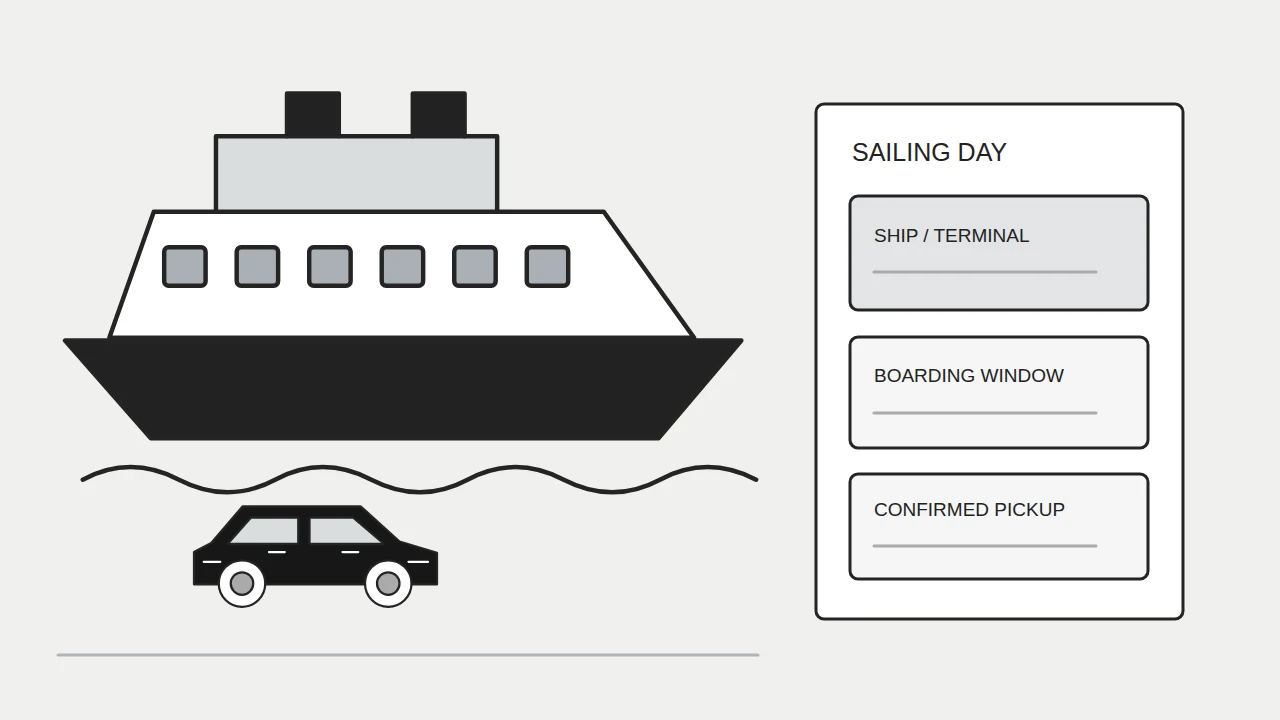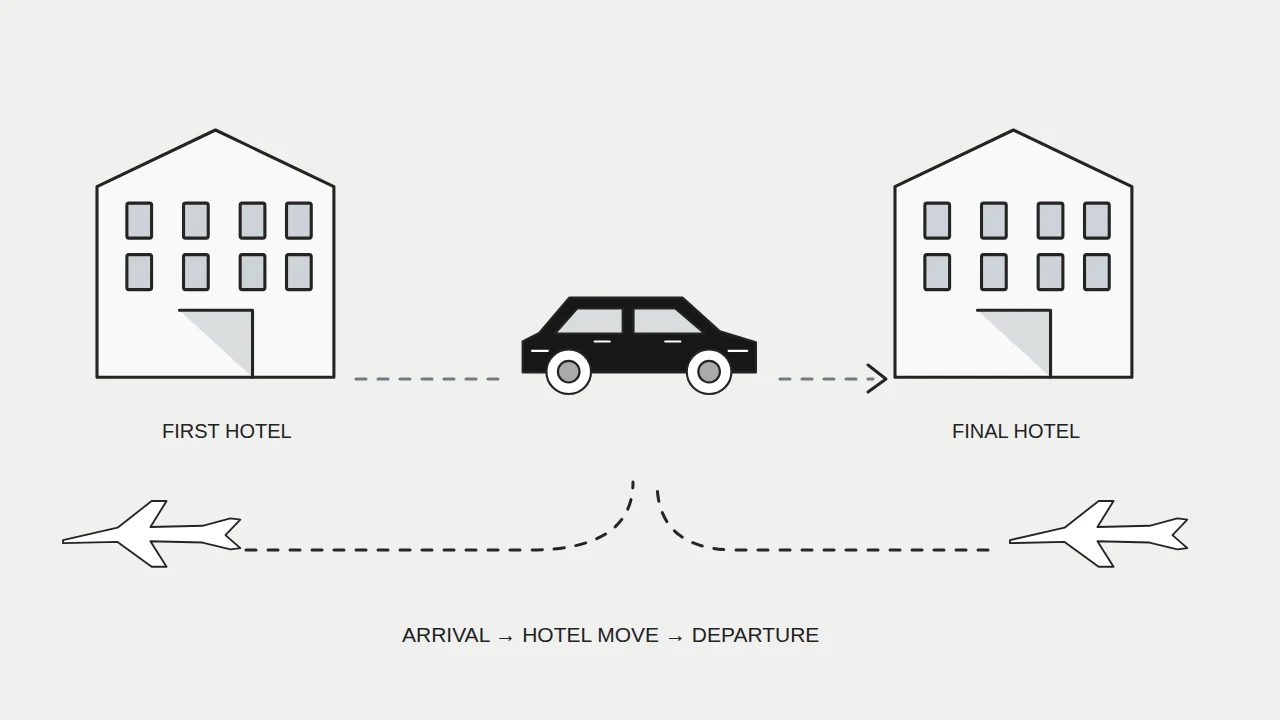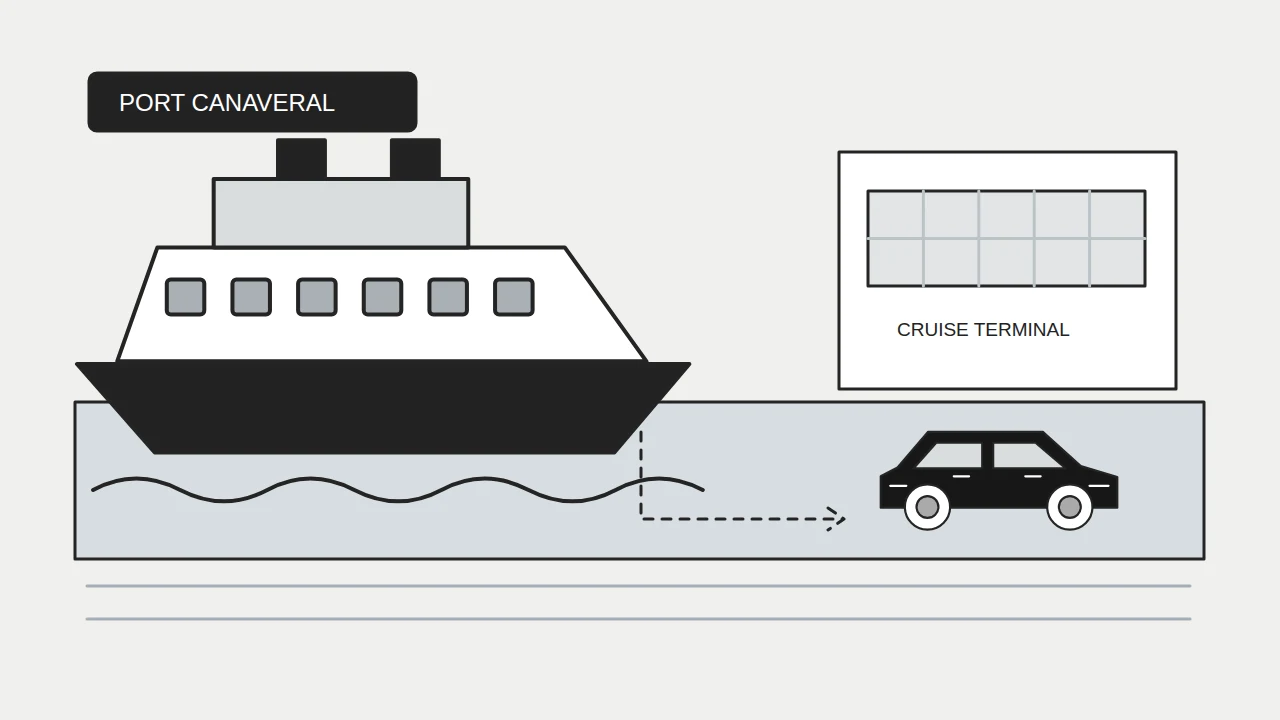
Use your cruise line’s current sailing documents to select the Port Canaveral terminal, then plan transportation around boarding and disembarkation requirements. The official port map identifies addresses; it does not make every cruise line’s terminal assignment permanent. Suits Black Car reviews airport and hotel transfer requests with the exact sailing and passenger details. MCO-to-Port requests require a quote; the published Port-to-MCO towncar base fare is $160 one way or $315 round trip.
Use the port map and sailing documents together
Port Canaveral is a working port with several cruise terminals and other destinations. A general “Port Canaveral” map pin is not a precise passenger drop-off address. Identify the terminal in your current sailing documents, then use the port’s official cruise terminal map to understand its location.
Check the documents again close to departure. Terminal assignments can vary, so avoid assuming that a familiar cruise line always uses the building from your previous trip. Give the transfer team the terminal number and address when supplied, as well as the ship name and sailing date.
If the terminal is not yet confirmed, say so rather than filling a guess into the request. Send an update once the cruise line provides the current information. Your eventual transport confirmation should reflect the actual terminal and meeting arrangement, especially for the return after disembarkation.
Official terminal addresses for orientation
| Terminal | Address shown on official map |
|---|---|
| 1 | 9050 Discovery Road |
| 2 | 180 Christopher Columbus Drive |
| 3 | 220 Christopher Columbus Drive |
| 5 | 9245 Charles Rowland Drive |
| 6 | 9241 Charles Rowland Drive |
| 8 | 9155 Charles Rowland Drive |
| 10 | 9005 Charles Rowland Drive |
These addresses are from the official port map reviewed September 30, 2026. Use them to identify the named terminal, then confirm the sailing assignment and access instructions through your cruise line. They are not a list of permanent cruise-line allocations or a promise that a particular ship always uses the same address.
Keep the embarkation and return details together. The place where you are dropped off before sailing and the meeting instructions supplied after disembarkation may serve different purposes even at the same terminal. Follow your confirmed arrangement rather than choosing a pickup solely from the map table.
Set embarkation timing from the cruise requirements
Find the boarding appointment and any final boarding cutoff in the cruise line’s instructions. Work backwards through port access, unloading and the journey from your hotel or airport. The point of the plan is to reach the required process on time, not simply to reach a broad port area before the ship’s advertised departure.
If flying on embarkation day, account for the steps after landing: leaving the gate area, collecting luggage and any required international processing. A landing time before the boarding window does not settle whether the itinerary is practical. Ground transport cannot remove airline disruption risk or extend a cruise line’s cutoff.
Consider a pre-cruise hotel as a separate itinerary option when it suits your circumstances, then arrange the hotel-to-port leg accurately. This is a planning choice, not a guarantee that disruption cannot occur. Check the hotel’s own transport package before requesting another ride, and confirm what any included transfer actually covers.
Compare airport and hotel transfer routes correctly
MCO and SFB are different airports, and a hotel journey is another endpoint again. List each leg explicitly: airport to hotel, hotel to terminal and terminal to departure airport as applicable. If you need only one of those legs, state which rather than asking for a vague round trip.
The MCO-to-Port Canaveral page explains the quote-only airport-to-port direction. The published Port-to-MCO towncar base is $160 one way or $315 round trip for that listed route. Do not reverse that price to invent an MCO-to-Port standalone fare. Use the directional rate table for published hotel and airport routes.
Published base fares include tolls and taxes. Overnight pickup charges and optional gratuity are separate. An additional stop or changed endpoint needs review, and the chosen vehicle must fit the passengers, bags and child restraints. Compare the complete itinerary rather than assuming every port transfer has the same cost.
If driving yourself, compare the complete parking plan
A rental car or personal vehicle introduces collection, driving and parking tasks that a passenger transfer does not. Compare those costs and responsibilities with the itinerary you actually need. Check the port’s current cruise information for parking and access guidance before travel.
As of the review date, the port publishes cruise parking at $20 per day plus tax, including arrival and departure days. Verify the current rate and calculation for your sailing directly with the port. Do not assume a cruise of a particular length is billed only for nights away; the published rule includes both endpoint days.
For a rental car, confirm the return location, opening arrangements and how you will reach the passenger terminal after handing it back. Those details belong to the rental provider and any separate shuttle arrangement. A car reserved for the vacation is not automatically a complete port-access plan, especially when equipment and a large group are involved.
Organize cruise bags and child-seat requirements
Count all cases and carry-ons for each household, then add folded strollers and bulky equipment. A large passenger allowance is not an unlimited luggage allowance. Use the vehicle capacity guide to compare all three constraints: passengers, suitcases and requested child restraints.
Seats are complimentary on request within the category limits, subject to confirmation. Include each child’s age, size and required type. If bringing your own seat, state whether it is needed during the ride or traveling as luggage. Cruise-line cabin storage and airline seat rules are separate from the ground-vehicle configuration.
Keep documents, medication and anything needed before cabin access in a small bag. Follow the cruise line’s baggage instructions for the terminal, and check the count before handing over cases or leaving the transfer vehicle. If the party splits after the cruise, prepare a separate load inventory for each onward vehicle request.
Plan disembarkation without confusing it with ship arrival
The ship’s scheduled arrival is not the moment every passenger reaches the curb. Your cruise line’s release process, luggage collection and any customs requirements influence when the party is ready. Review its instructions and confirm the return pickup based on a practical arrangement, not solely the published docking hour.
For a same-day flight, work backwards from airport processing as well. MCO recommends reaching the security checkpoint two hours before departure; the drive, unloading and airline tasks occur before that milestone. Use the airline’s requirements for the actual flight when considering whether the schedule leaves enough room.
Keep the return meeting instructions accessible and appoint one coordinator for the party. Gather everyone and the luggage before reporting that the group is ready. Share a changed terminal or readiness issue accurately, and wait for any revised arrangement to be confirmed. Your cruise transfer request should state the true onward destination, whether airport, hotel or another address.
Confirm the sailing itinerary before travel
Review the dates, terminal, flight and load together, then submit the complete cruise transport itinerary. Check that a round-trip selection describes the actual endpoints; different airports or hotel stays may require separate route review. Include any intermediate stop rather than assuming it is part of a direct transfer.
Online card payments are not available yet. Ride requests are saved for our team to review, and custom or hourly rides receive a quote first. Your ride requires our team’s confirmation.
Where a priced route offers checkout, payment creates a paid request. Separate ride confirmation is still required. If Suits cannot provide the ride, the team will issue a full refund of the amount paid. Read the reservation policies and keep the eventual confirmation alongside the cruise documents.Revisit the plan after any airline or sailing update. A change to one journey can affect the next leg, so review the whole sequence rather than changing only a single time. Clear terminal and timing information gives you an arrangement that describes the trip you intend to take.
Keep the terminal and itinerary references current
Save the cruise line’s latest documents together with the ride confirmation. Label embarkation and disembarkation separately, including the onward airport or hotel. If the sailing instructions change, review the dates, terminal and relevant pickup details as a set. A new terminal number should not remain only in a message that the person coordinating transportation has not seen.
For a large group, list each traveler and their luggage beside the requested vehicle arrangement. Identify who will contact the team and who will check the bags. If some travelers continue elsewhere after the cruise, mark the separate leg clearly rather than assuming everyone belongs in one return request.
This reference is a way to keep your own plan organized. It does not replace the cruise line’s current terminal and boarding requirements or the team’s confirmed meeting instructions. Use those actual documents for the sailing and transport arrangement.
Frequently asked questions
Does a cruise line always use the same Port Canaveral terminal?
Do not assume a permanent assignment. Use the cruise line’s current sailing documents and check for updates close to departure. The official port map helps identify the terminal address, but it does not replace the assignment for your own sailing. Share the confirmed terminal and any changes with the transfer team.
How should I choose my airport flight after a cruise?
Consider the cruise line’s disembarkation process, luggage and required arrival processing, then allow for the road journey and airport requirements. The ship’s scheduled arrival alone is insufficient. MCO recommends reaching the security checkpoint two hours before departure, with airline-specific guidance considered separately. Confirm a practical pickup arrangement for your actual itinerary.
Is port parking charged only for nights on the ship?
The port’s published parking guidance, checked September 30, 2026, includes arrival and departure days in its daily calculation. Verify the current rate and rules directly for your sailing before budgeting. A cruise-night count is not automatically the same as the billed parking-day count, and tax is separate from the published daily figure.
Can I get a direct MCO-to-Port price from the Port-to-MCO row?
No. The published standalone row is Port Canaveral to MCO, and the opposite airport-to-port direction currently needs a quote. Include the flight, sailing date, terminal and passenger details for review. A price for another direction is not a confirmed fare for your intended airport arrival journey.